
Blog 100 - On Being Alive

For this my 100th Blog I want to write about a topic which, as my journey through life continues, has been in my mind for some time. I am also finding unusually difficult to write. Not because I don’t know what I want to say. But because so much is personal. Those of my readers who are familiar with my blogs will have seen that, whilst I write with a particular perspective, my rule has been wherever possible to say as little as possible about my personal life. Regular Facebook posts “hey guys, this is me” are not for me.
This time it seems that I am going to have to transgress this rule somewhat.
For all of us this past year and a half has been like no time before. Defined by the Covid 19 pandemic, what we now look back on as “normal life” has been on hold. Each of us, in our way, has had to learn to live a new normal; one that is constantly evolving according to external forces and our individual ability to respond and adapt to those forces - forces which for too many of us have been brutal and life changing.
Whilst all our lives have been affected, what interests me is how differently different generations have been affected. And how they have responded.
I am in awe at the families who have survived lockdowns confined within small flats, parents, children, pets, kids struggling to keep up with schoolwork, parents trying to work remotely from home or, where furloughed, struggling with boredom and anxiety.
I am in awe at the way young people, so often criticised and little understood by their parents’ and grandparents’ generations, have uncomplainingly taken in their stride messed up school years, chaotic examinations, upended experience of university and months of absence of sport, gyms or indeed any other physical interaction.
I am in awe at the way my own generation, many in straightened circumstances, have endured months stretching into years of often solitary loneliness.
I am in awe at how humanity, individually, has coped. With how society has come together, accepting situations which only weeks before were unimaginable. How scientists have done the seemingly impossible, creating and mass producing in months vaccines which previously would have taken years. How wonderful people as individuals have been, all too often in the face of often appalling governments.
Readers who know me personally will know that, whilst no more difficult than the pandemic lives of others, in its own way my own pandemic experience has not been without its challenges.
Such that, post pandemic, I now take nothing for granted.
I find myself in awe and in love with life, with the very fact of being alive.
Coincidentally Mathew Syed wrote about this in last week’s London Sunday Times, citing:
“The top five regrets of the dying written by Bonnie Ware, an Australian palliative nurse, who recorded (with permission) some of the intimate conversations shared with those for whom she cared as they came towards the end of their lives. She found that a remarkable number of people had the same fundamental regret: namely that they didn’t embrace the preciousness of life while there was still time. They lived, to use that familiar expression, as if life were a dress rehearsal.
In the opening chapter, Ware writes of an elderly woman called Grace: “a tiny woman with a huge heart” who as the end approached lamented “all the dreams she had waited all her life to live were never going to happen”
As Syed wrote, “she didn’t mean this in a self-interested way. Rather the words reflected her astonishment that she had regarded life as “normal” or “routine” when it was, in fact, miraculous.
Writing of the death of his father earlier this year, Syed writes of how, through all the emotional pain associated with his Dad’s recent passing, he also felt – at an infinitely deeper level of consciousness – gratitude too.
“What a privilege it was to have known this great man. What a privilege that he lived when he might never have done so; that Syed lived – and still lives – when he might never have done so. That he and Syed and the rest of his family and all the others he’d touched in his extraordinary life, had an opportunity to live and breathe and have being when we might never have stirred from the prior state to which we will all, one day all too soon, return. “It is a thing most wonderful, almost too wonderful to be”. “Let us never forget this”
I was bowled over reading this. Syed perfectly articulates what, post pandemic, I have come to feel.
Sadly, very recently, the importance of not taking life for granted, has been further and very directly brought home to me by the death in August of my sister-in-law Wendy Brecher after a long illness and, just two weeks ago, by the sudden death of Wendy’s husband Henry
So, I have been thinking a lot about life.
As I have journeyed through life, I have become increasingly aware of how incredibly fortunate I have been to be born when and where I was. In 1957 Harold Macmillan’s election winning slogan was “You’ve Never Had it So Good”. Truly no generation has ever had it so good as we the post-World War 2 “baby boomers” generation; mass affluence, cheap food, decent housing, effective health care, extended life expectancy, spare part surgery, widespread higher education, safe affordable international travel, global communication, absence of war all having become the norm within the space of just a few decades. Plus, if one happens to be Jewish, for the first time in two thousand years living free from persecution with a Jewish state in existence.
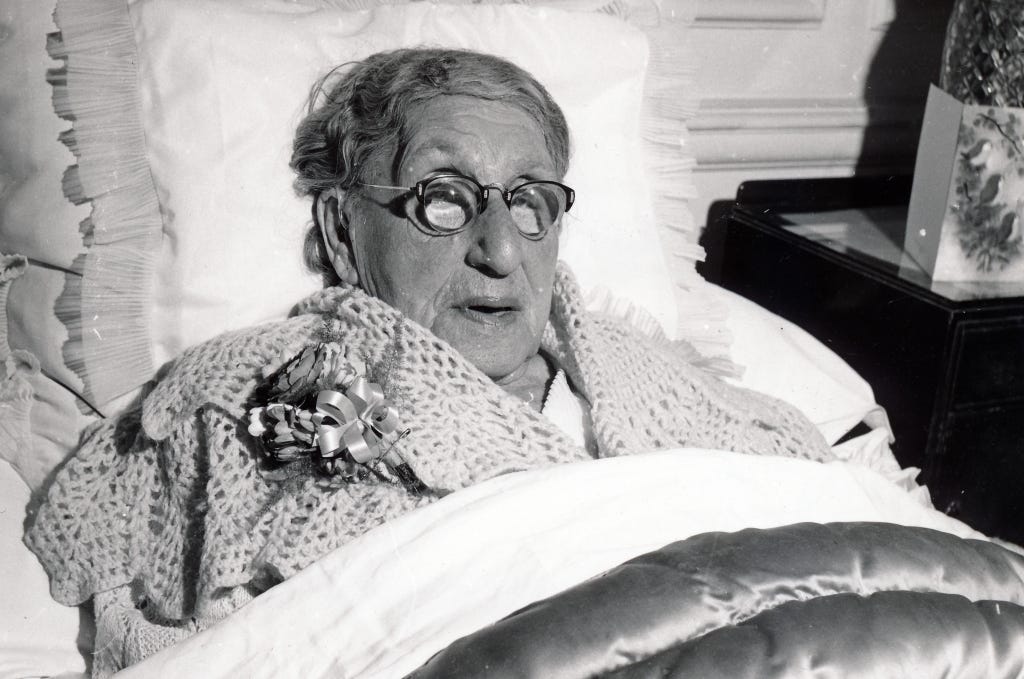
I am also now old enough to have the experience of several generations. My great grandmother Sheba Myers lived to the age of a hundred and one.
Before smart phones with their digital cameras, our home became increasingly cluttered with boxes and boxes of photos. Some we had put in albums, but as the demands of family and professional life grew, it wasn’t long before we gave up and using valuable space they ended up unloved and unvisited, just sitting in their boxes,
Perhaps because of the nature of my then law practice, I was aware quite early that photos could be scanned and digitised. So off they went to Leeds, boxes and boxes of them, to be converted into a single hard drive less than half the size of a brick (they are a quarter of that size now) – which I then did nothing about! Until this weekend.
Now sitting on my PC screen, at the click of a mouse are several thousand images, not just of my life and the lives of our children and grandchildren growing up, but early colour photos of my parents when they were young and wondrous black and white images of them as children and of my grandparents and great grandparents. Together with my children and grandchildren, six generations stretching back some hundred and fifty years, all known to me.
Known to me because unusually among British Jews all my grandparents were born here (well, almost, my mother’s father arrived when he was two). Known to me because again, unlike the experience of so many other Jewish families, none of my forebears and none of their families had to flee or perished in The Holocaust.
Another reason to cherish life and take not a single day for granted.
My generation celebrates increased life spans, at least so long as we remain well and active. Which increasingly throughout large parts of the world is becoming the norm, thanks to the ever increasing sums spent on health care, scientific and technology developments and the feats of engineering which make it possible.
There is however a conundrum.
As we live and remain active for longer, the more we consume.
For how much longer can the planet sustain this?
This is not a new concern. Writing in 1798 Thomas Malthus, an English scholar, cleric and influential economist, observed that populations had a tendency to grow until the lower class suffered hardship, want and greater susceptibility to famine and disease such that growth became unsustainable. As Paul Morland points out in his recently published The Human Tide; How Population Shaped The Modern World, it took hundreds of thousands of years from the dawn of humanity to when Malthus was writing for the world’s population to reach one billion, but only a couple of hundred years more for it to reach today’s 7 billion.
Now, however, there is a slowdown. In the late 1960’s the number of people on the planet was doubling roughly every 30 years. Today it is doubling every 60 years. By the end of the current century there is a good chance that the global population will have stopped growing altogether. Some countries are already experiencing population decline.
Given that the richer the population the greater is its impact on the planet, the race is now on to see whether through slowing birth rates, changed behaviour and the development of new technologies humanity can yet again hold Malthus’s prediction at bay. Or whether, this time around, the frailty of the planet will prove to be just too much and, for humanity, the world we know will be no longer.
My betting is still with humanity. Though I shall not live to find out. Nor hopefully, if I am wrong, will my readers.
Whilst the answer to whether Malthus is proved right after all will escape me, I am increasingly conscious of a second conundrum the answer to which is entirely in my hands.
This second conundrum? For the ever-increasing numbers of us septuagenarians and soon to be octogenarians able to enjoy active rich lives, what are our lives for? As we continue to consume, to use resources, are our lives worthwhile? And if so, why? What is it that stops us just being in the way?
Tough questions put starkly.
Back in London I have been watching how our daughter and her husband parent their children. Differently from how my wife and I did it. Whilst sign posting the way ahead, essentially they leave their teenage children to find their own way, to make their own choices, to find out what works and what doesn’t from making their own mistakes. It's impressive and seems to work.
Signposting. Perhaps there lies the answer. Deep within six generations of photos I have increasingly come to understand how the power of what came before makes possible what is now; that what is now in turn becomes what came before.
In the Great Game of Life our lives do matter. How we live those lives matters. The story of our lives, the way we conduct ourselves, the ways in which we have met life’s inevitable challenges and identified and taken advantage of its opportunities, the way in which we adapt to old age, all matter. Not just for our sake. Our lives matter because they are signposts to those who come after us.
I have heard it quipped that the reason grandparents and grandchildren get on is that they have a common enemy! I don't subscribe to this. Yet I do see that the relationship is different. When it works well, grandparents can be a safe place, where their love, experience of life and longer perspective is both relevant and available to be shared and explored free from stress or obligation.
I was fortunate to know my great grandmother and three of my grandparents. We all lived in the same town, just minutes away from one another. As a small boy I regularly visited them on my tiny bicycle. In 1954 when I was ten I stayed several weeks with Raie, my mother's mother, whilst my parents went by train and ship to visit the still new Israel. Quite an adventure in those days. Raie, as she was known by everyone, lived around the corner. Widowed before I was born, she ran a highly regarded boutique dress shop in Harrogate's best street and in her spare time managed to be a mainstay of the Harrogate Dramatic Society. I knew her only as a second mother. With two grans in town it hadn't ever occurred to me that Raie was also a grandmother, not until one day I asked my Mum in all seriousness why she referred to Raie as "mother".
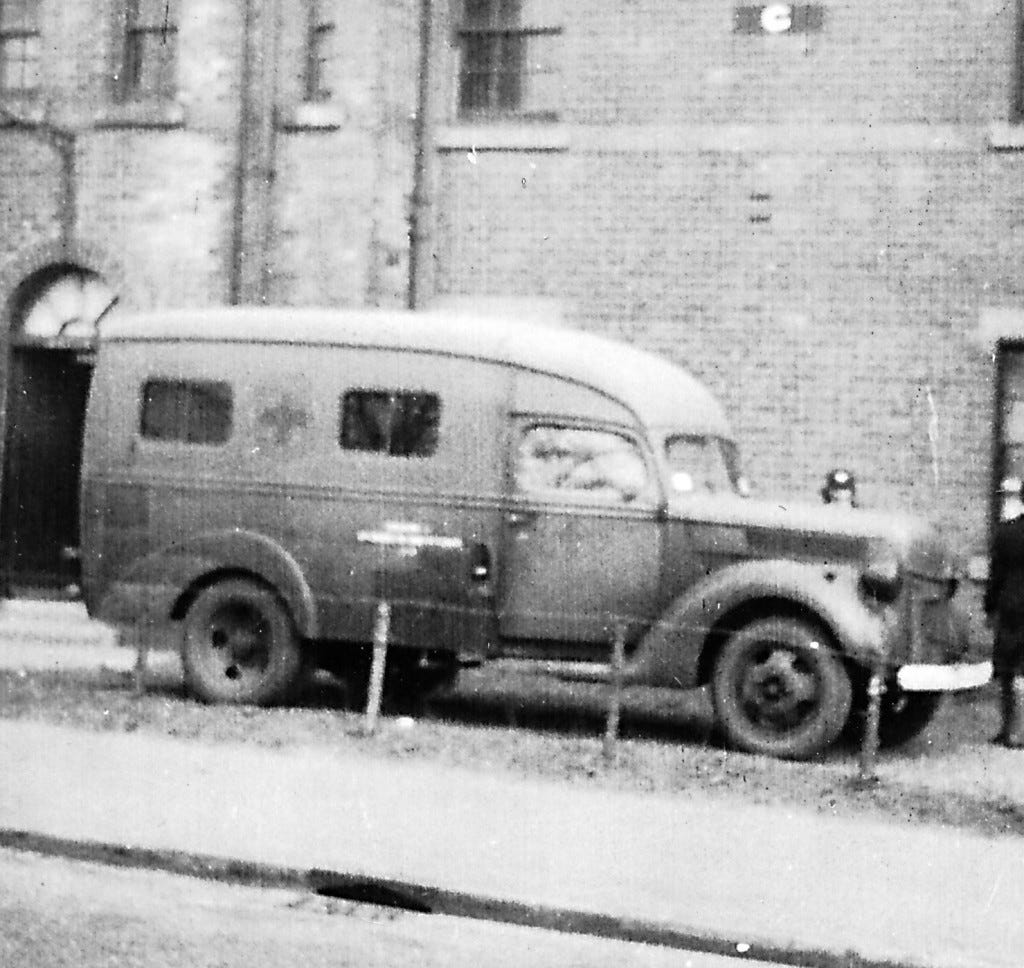
I also saw how my children loved and enjoyed my parents. Below is a photo of my father in uniform. When he met my mother she was also in uniform, driving Red Cross ambulances in the blitz. They were unusual. After I was born my father was posted to a Royal Artillery anti aircraft unit guarding the Atlantic Fleet,in Scapa Flow, in the Orkney Isles. Somehow he arranged for my mother and I to join him. Married quarters consisted of a Nissan Hut. Food was rationed. They kept two pigs, which in a nod to their Jewish heritage they called Matza and Gefilta. I never found out what became of them. The pigs that is.
From everything I know my forebears in this country were good people, kind to the world, kind to others. Perhaps only now, in what in any reckoning has to be the autumn of life, have I come to realise what I owe them, how strong must be the genes which, as stares out from the photographs, live on even in my grandchildren. So yes, grandparents do matter.
At this stage in life's journey bad things are beginning to happen to those around me. Making every day even more of a miracle - to be prized and, despite inevitable disappointments and setbacks, never to taken for granted. Making the most of every day was never more important.
Whilst the challenges have been many, life has been kind. As I wrote earlier, never in all of history has there been a more privileged generation. My achievements, such as they are, are ephemeral. When finis comes the only epitaph that I could wish for would be "He Lived a Good Life".
May that day be long delayed. Until then on with the Game..........

smo/ 08.10.2021